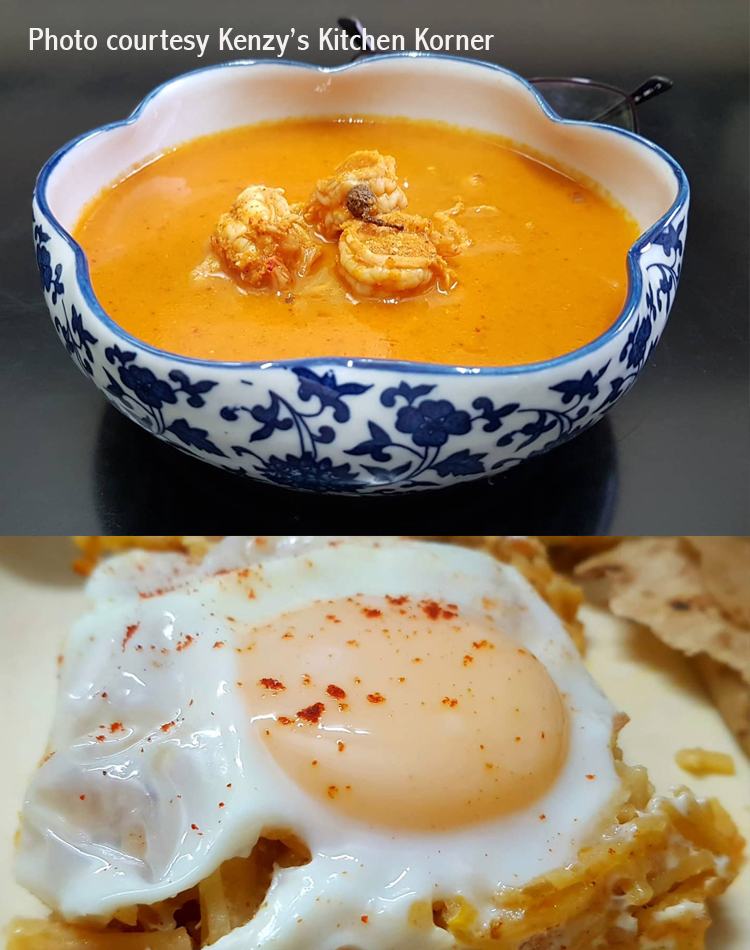
Parsi cuisine has been shaped by two ancient cultures; Persia, where we originated from and India where we last settled. Parsi Cuisine is generally Non Vegetarian in nature. Ever since the Parsis landed on the shores of Gujarat, the lack of Persian specialty spices, forced the Parsis into blending and infusing our fares with the local spices and vegetables. Typically, a Parsi menu will have just small list of Vegetarian items. To stomach a vegetable, Parsi's would normally crack open an egg, cook it over our vegetables and then make a dish out of it.
Given time we infused our non-vegetarian food with vegetables and invented what is called ‘Bhida ma Gosh’, ‘Dhodi ma Gosh’, ‘Saas ma Machi’, ‘Papeta ma Margi’, Gajar ma gosh’, ‘Sal Boti’, ‘Khari Murgi’, ‘Methi ma Murgi’, ‘Papri ma Kabab” and many many more combinations as such. Parsi Cuisine is generally not spicy in nature and the hint of sweetness in our meals comes from the influence of Gujarati cuisine that often use jaggery in their meals. The infusion of leafy vegetables along with meat is not an uncommon feature of our cooking. The Parsi Kitchen can work wonders with just a handful of spices, the common Ginger Garlic paste, turmeric powder, red chilli powder, salt and sugar.
The Parsis would best have vegetables like Brinjal, Red Pumpkin, Fenugreek (Methi) etc. when infused with lentils and cooked with Lamb. And thus came the existence of a dish called ‘Dhan-sakh’, which is a combination of vegetables, mixed lentils, and of course, meat, which is usually lamb. ‘Masoor ma Gosh’, another hot favorite amongst the Parsis, is also a dish made with ‘Akka Masoor”, that’s Black lentils, a hint of mint, cooked with Parsi masala’s and of course, lamb. Usually accompanied with ‘Aakhi dar na eeda’ (Sunny side up fried eggs) and ‘Broon Pav’ from a particular Parsi Bakery is a must for ‘Masoor ma gosh’.
Our Dals and more commonly the ‘Mauri Dal’ is yellow lentils, usually tur dal (split pigeon peas) is simply cooked with some ‘Jeera and Lasoon’,(that’s Cumin and Garlic). Mauri Dar is usually made on auspicious occasions and goes best with long grained basmati rice and the unavoidable ‘Machi nu Patio’ or ‘Jinga no Patio’. Our sambar dal is also cooked very differently with loads of vegetables, jaggery, tamarind extract etc. Other common dals in parsi households would comprise of ‘Chana Dal ma Dhodi’, ‘Masala dar’ etc.
With no vegetables at home, a Parsi household needs to just crack open eggs over sautéed onion and coriander, thereby the existence of ‘Kanda Kothmir par Eedu’. The yolk (usually called 'dal' by us) of the egg cannot be hard and often has to remain loose and must more than often, spread over our vegetables. Not only vegetables but quite popular even these days is the ‘Kheema per Eedu’, made the same way, with the yolk running loose. Some of the popular ‘Per Eedu’ dishes are the very common, ‘Tamota per eeda’, ‘Papeta per eeda’, Bhida per eeda’, ‘Sali per eeda’, ‘Kheema per eeda’, ‘Turai per eeda’, ‘Kanda Kotmir per eeda’, ‘Methi Palak par Eedu’ etc. If everything fails, Parsi's can customize any ‘leftover per eeda’ too, which would generally mean that if any vegetable wasn’t being consumed by the family, the best way to consume it would be to crack open some eggs and make a dish out of it.
Much before Col. Sanders invented the Kentucky Fried Chicken, we, the Parsis already had our version of fried chicken. Called, ‘Farchas’, these succulent pieces of Chicken, usually drumstick or full legs, had more spices infused, egg washed and fried to a golden brown. ‘Parsi Kheemo’, is a hot favorite among the younger folk and can often be had even for breakfast is made with the requisite ginger garlic and parsi masalas, made ‘Khatto Mitho’ style, which is not only tangy due to the addition of sugarcane vinegar but with the addition of jaggery or sugar. The quintessential ‘Patra ni Machi’ is typically a Parsi dish where in the tastiest of fish, Pomfret in India, is wrapped and cooked in banana leaves with a mint chutney, typically with a hint of sweetness, sourness and spice infused in it. Patra ni machi is usually served at weddings and festive occasions and is a hot favorite among non-parsi's. ‘Tatrela Jinga’, best had with a parsi peg, are marinated prawns and sauteed with pure ghee and served hot. They are made in a traditional way as the parsi's call ‘Khato Mitho Theeko’, which means they're not only tangy and sweet but spicy as well. Even the Golden fried prawns are no match for these babies.
Coming to eggs, one cannot forget ‘Akoori’, a typical Parsi dish made out of the most basic masalas, wherein the onions are first cooked with the spices and while the pan is hot and the flame is low, the eggs are thrown in and cooked only till they’re half done. Most non parsis would say this is raw but that’s the way it was traditionally made and several households still make it the same way, loose as a goose. Breakfast is more than usual, egg in every and any form, be it, ‘Bafela eeda’- (boiled eggs), ‘Charvela Eeda’- ( scrambled) , ‘Poro’- (omlettes) , ‘Akoori’, ‘Kharo Poro’- (Omelettes without the onions tomatoes etc), ‘Aakhi Dar na eeda’- (Fried eggs), or even the seldom known, ‘lila lasoon nu eedu’ (Tender garlic sprouts, sautéed in ghee scrambled with eggs and cooked.
Parsi snacks would comprise of ‘Bhakras’ (wheat based cookies, best cooked with Tari but not baked, instead fried), ‘Dar ni Pori’ – (much like the poran poli but only an inch in thickness where the dal is cooked and infused with cardamom and nutmeg), ‘Patrel’- (Somewhat close to the Aloo vadi but made parsi style with jaggery and red chilli powder), which are adaptations from gujarati / Maharashtrian cooking and tweaked with a difference to suit the Parsi palate. There is no recorded history of Parsis migrating to Russia, neither is anyone able to account how this snack got its name, but we Parsis have a certain cutlet called the ‘Russian Pattice’. Made with soft potatoes and shredded chicken with a dash of cheese and butter, irresistible as an evening snack. In a similar fashion, we also have the ‘White Sauce Cutlets’ made in the exact same way only these cutlets are made with white sauce as a base and not potatoes. Both are egg washed and deep fried to a crispy golden brown. ‘Kheema Pattice’ another popular snack made with a filling of ‘Khato Mitho Kheemo’ and a covering of soft mushy potatoes, egg washed and fried. Similar to this, is the even more popular ‘Eeda Chutney Pattice’ made in the same way but with a filling of Boiled eggs and our ‘Khatti Mitti Chutney’.
Our desserts too, are made from vermicelli and semolina common to most Indian desserts but with a Middle Eastern twist and unique flavour. The light goodness of caramel flan adopted to become ‘Lagan nu Custard’ with the addition of dry fruits is a typical example of Caucasian influence on Parsi Cuisine.
The Food Gallery is a family run, proprietorship firm, established in 2014 and run by Hutoxi Mabrin Nanavatti and all recipes are those that have been handed down over generations. Order through our tiffin service, catering or frozen foods.